
Product · How it works
How Mya works
Mya turns coordination into software — a continuous loop, always running: it detects what moved, decides what matters, proposes the next move for your approval, then acts across your tools — carrying the full context forward.
Detect
Mya watches your tools and turns raw activity into typed signals — a blocker in a thread, a meeting with no agenda, a review request.
.svg.png) Gmail
Gmail Outlook
 Slack
Slack.svg.png) CalendarGitHubNotion
CalendarGitHubNotion JiraSalesforce
Decide
A prioritization engine scores every signal — deadline, sender, your priorities — into clear tiers. Explicit and configurable, not a black box.
Approve
Coordination becomes software — judgment stays yours. Mya brings you only the calls a human should make; one click, and it drives the rest.
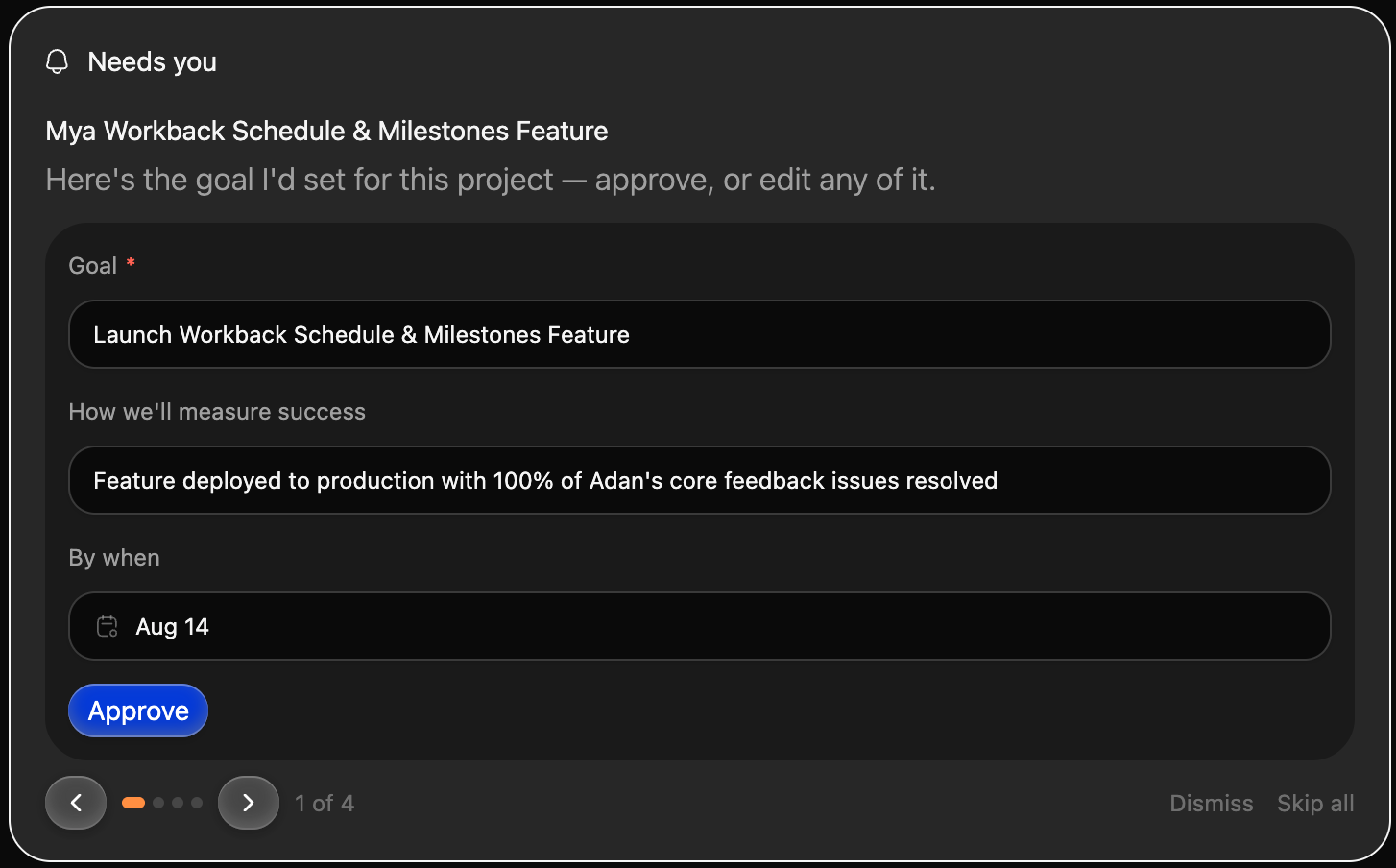
Act & track
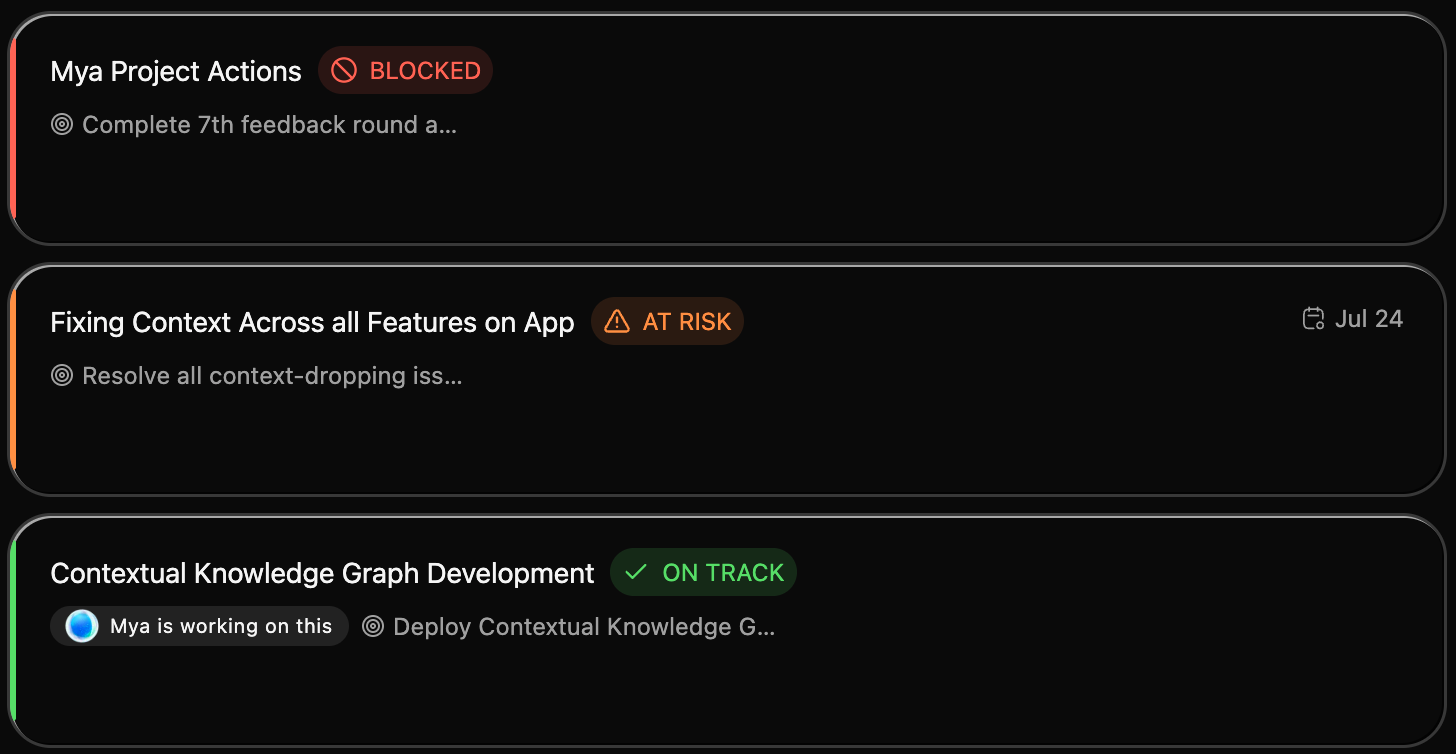
On your OK, Mya acts at the source — across tools, in sequence — and keeps every project's status current as work moves: on track, at risk, blocked.
One approval, one cross-tool sequence
Built for teams
Work is scoped, assignable, and accountable — across people and AI agents.
Roles
owneradminmemberInvite, change roles, and transfer ownership.
Permission scopes
- USER — private to you
- MEMBERS — shared with a few
- ORG — open to everyone
Handoffs carry their full state, and approval chains route work across both people and AI agents (via MCP).
Memory — the company brain
Mya never starts from zero: a persistent model of every thread, project, decision, and blocker — across sessions and tools.
Declared
what you tell it
Learned
what it infers
Workstream state
every thread & project
persistent context, across sessions & tools
Powers what surfaces & what Mya proposes
That memory powers the prioritization engine — the rules and playbooks that decide what rises to the top.